Panel Construction
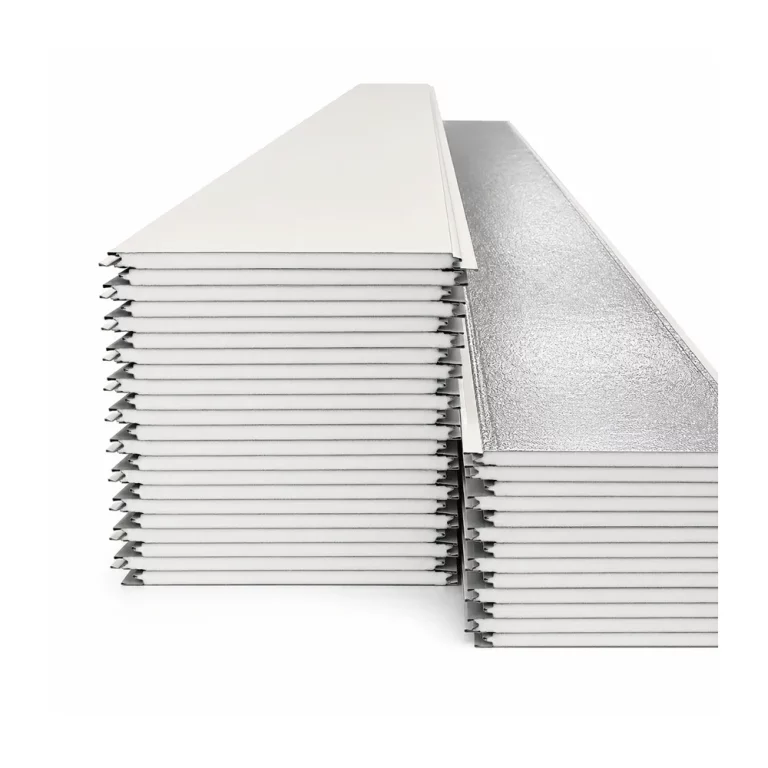
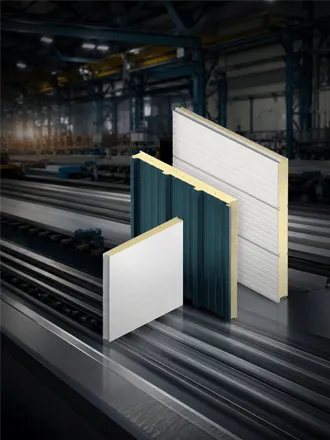
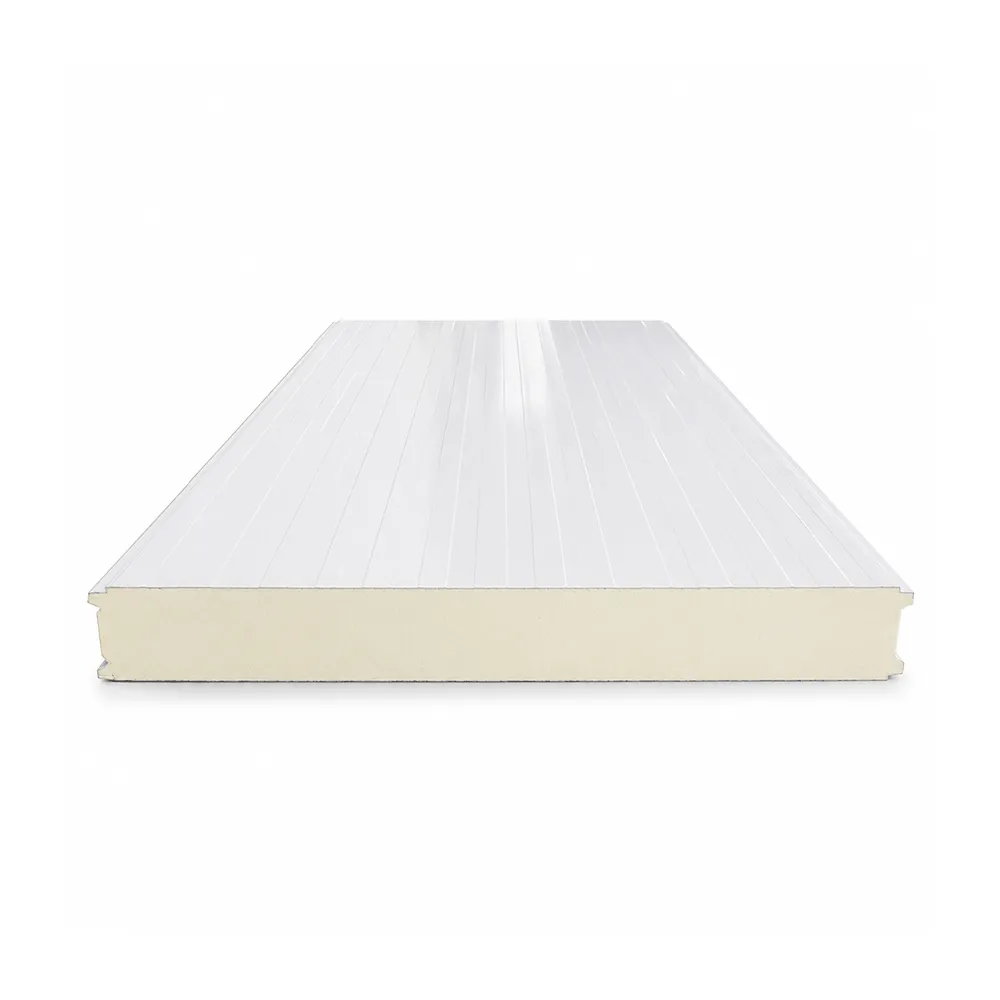
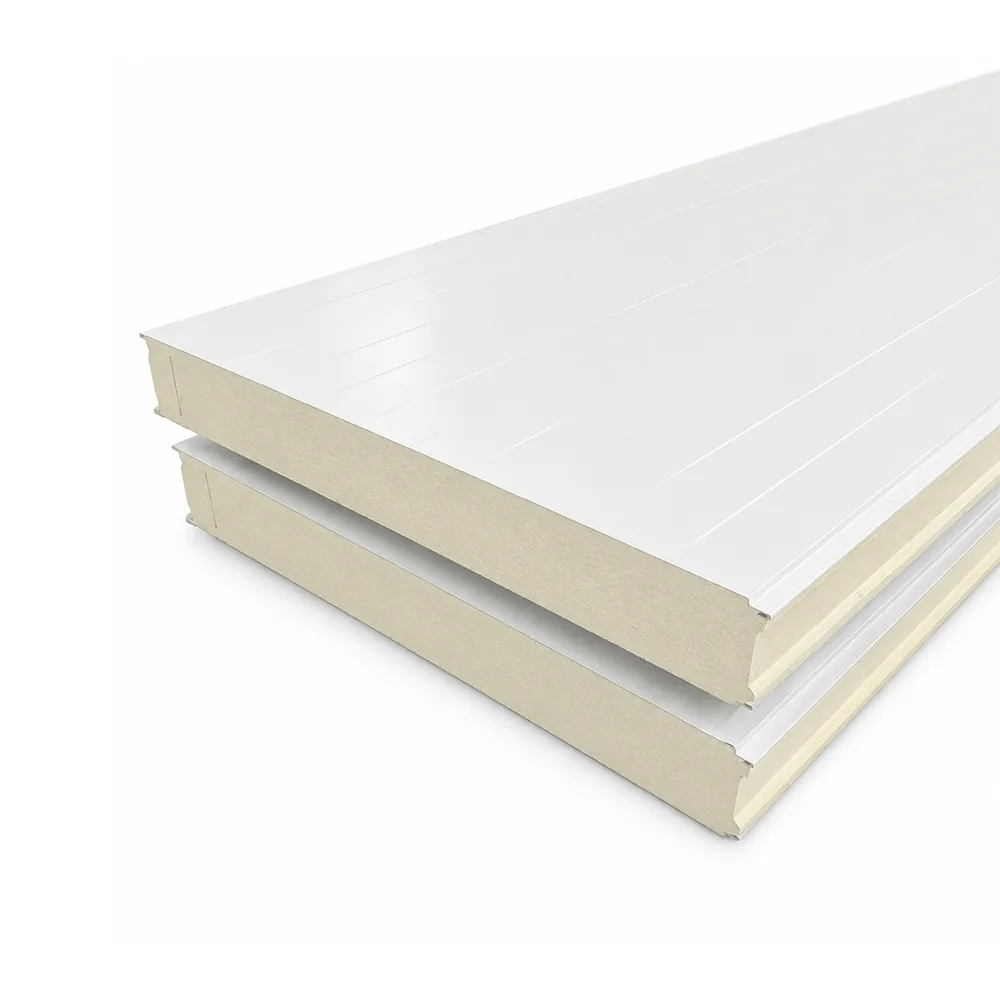
The double-sided steel PU sandwich panel is built from three bonded layers: an upper galvanized coated steel facing, a rigid closed-cell polyurethane foam core, and a lower galvanized coated steel facing. The two steel skins are formed into a profiled shape before lamination, providing structural stiffness and a flat finished surface. The panel is produced on a continuous automated manufacturing line, which ensures consistent foam density, uniform thickness, and a stable bond between the core and the steel facings throughout the full panel length.
Surface Material
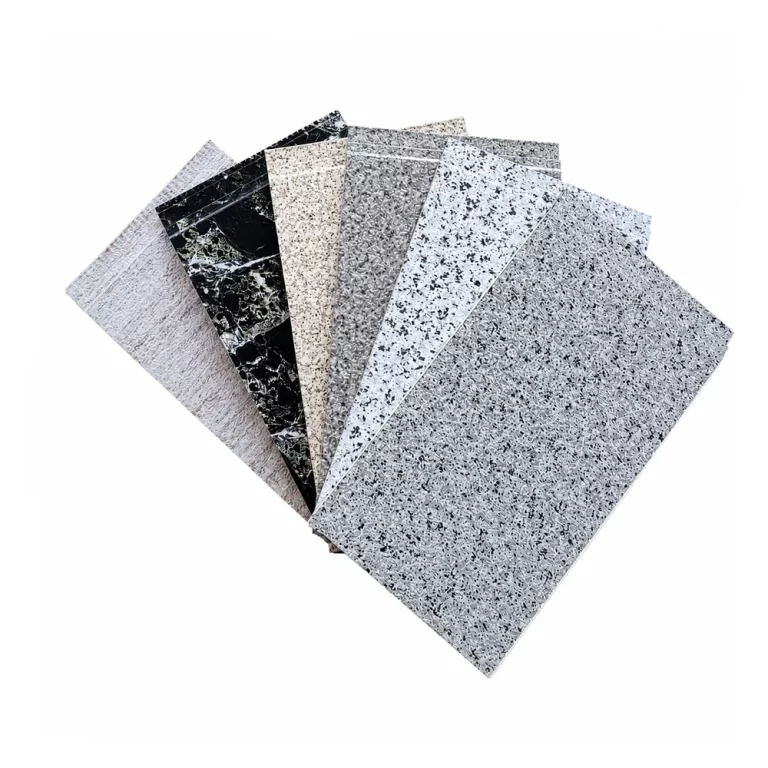
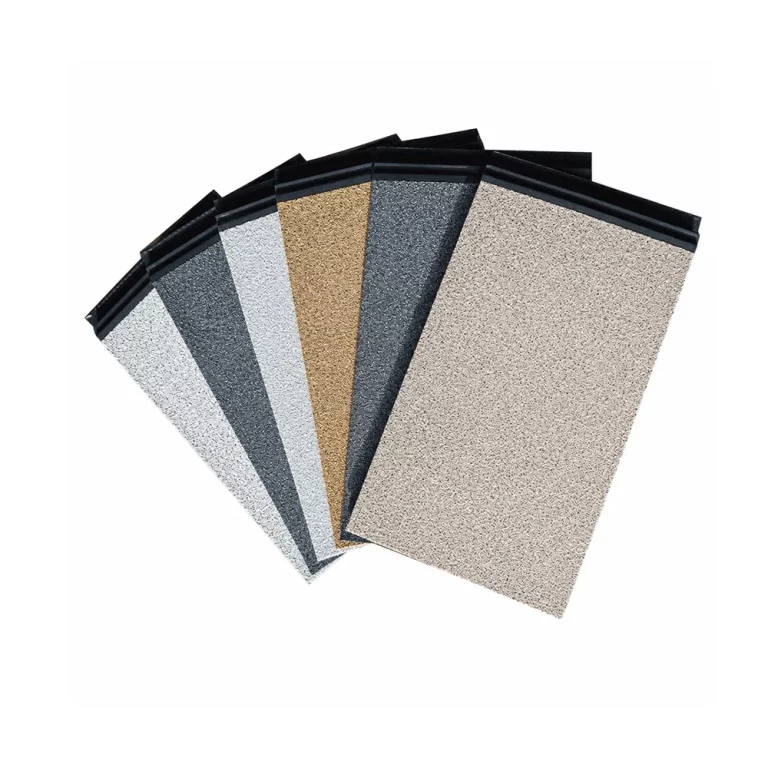
Both the upper and lower facings are made from hot-dip galvanized steel with a polyester or PVDF paint coating applied for weather resistance and corrosion protection. Steel facing thickness is customizable within the range of 0.3 mm to 0.8 mm, allowing buyers to select a gauge that matches structural load requirements and project budget. A wide selection of surface colors is available, including solid colors, and optional wood-grain, stone, or metallic finishes depending on project aesthetic requirements.
Polyurethane Insulation Core
The core material is closed-cell rigid polyurethane foam with a bulk density of approximately 42 kg/m³. Polyurethane provides a thermal conductivity of 0.019–0.023 W/(m·K), which is among the lowest available for foam-based insulation cores, allowing thinner panels to achieve the same thermal resistance as thicker panels made with alternative core materials. The closed-cell structure limits moisture ingress, with water absorption of 5% or below, and the material provides effective sound attenuation to help reduce the interference of external noise.
Fire Performance
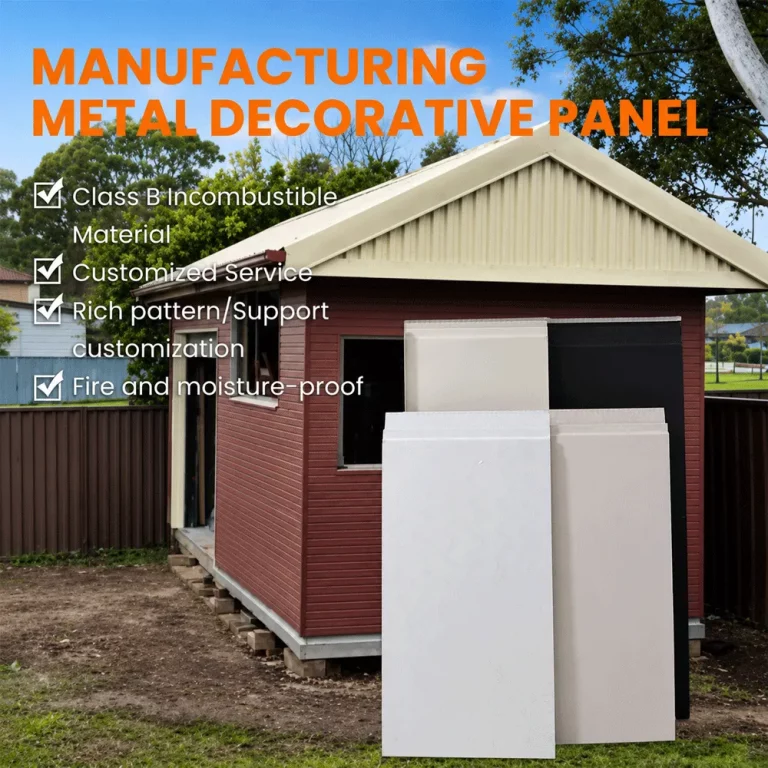
The polyurethane core is formulated to achieve Grade B fire performance classification. This classification indicates that the material is fire-retardant and is designed to help reduce fire spread and limit fire loss in the event of ignition. Buyers with specific fire rating requirements for their project or local building code compliance should confirm the applicable fire test standard and available documentation with the Fuqiang technical team before order placement.
Joint and Sealing System
The panel profile incorporates a tongue-and-groove edge joint that allows adjacent panels to interlock during installation. This joint system supports continuous thermal sealing along the panel edge, helps reduce air infiltration, and minimizes the risk of thermal bridging at the panel-to-panel connection. The hidden-screw fastening system conceals fixings within the joint zone, producing a clean external surface finish while maintaining structural attachment to the supporting framework.
Dimensions and Customization
The effective width is 1,000 mm per panel. Available standard thicknesses are 50 mm, 75 mm, 100 mm, 150 mm, and 200 mm. Panel length is customizable to match project floor-to-eave height or specific structural bay dimensions, reducing site cutting and material waste. Steel facing thickness is selectable from 0.3 mm to 0.8 mm on both the upper and lower skins. Custom surface colors, coating types, panel profiles, and packaging configurations can be arranged based on buyer specifications or OEM requirements.
Project Compatibility and Accessories
The double-sided steel PU sandwich panel is designed for installation on steel-framed, timber-framed, or concrete-framed building structures. The panel can be installed vertically or horizontally depending on the subframe spacing and project design. Matching accessories supplied by Fuqiang include corner trims, window and door surrounds, starting strips, closing pieces, ridge caps, and joint flashings, providing a complete single-source procurement solution. Fasteners, sealants, and installation instructions are available upon request to support contractors and project managers during the installation planning phase.


 Get a factory quotation