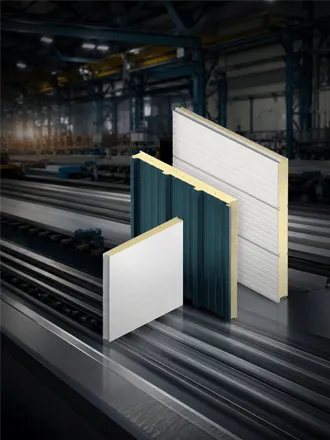
Buying from sandwich panel manufacturers in China can give international construction companies access to a broad range of insulated building materials, flexible customization, and factory-direct production. But choosing a factory based only on price can create problems with panel consistency, insulation performance, delivery, or project support. The right approach is to compare the product, production process, quality control, and service together.
Chine panneau sandwich manufacturers produce insulated wall and roof systems using different core materials such as polyurethane, rock wool, EPS, and other insulation materials. The best factory for your project depends on the application, thermal insulation requirements, fire performance, panel specifications, order volume, customization needs, and export requirements.
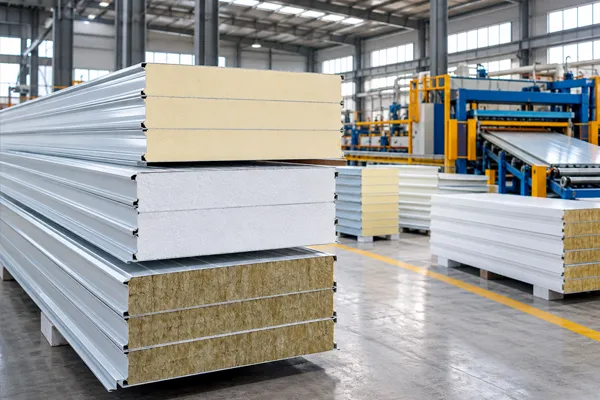
Sandwich Panel Manufacturers in China: How to Choose the Right Factory and Supplier
What Is a Sandwich Panel Factory in China?
A modern sandwich panel factory produces composite building panels by combining a metal facing layer with an insulation core. The result is a lightweight building material that can provide wall protection, heat insulation, sound insulation, and weather resistance in one system.
For international buyers, the value of working directly with sandwich panel manufacturers is not simply a lower factory price. Direct communication can make it easier to confirm the core material, steel sheet specification, panel dimensions, surface finish, packaging, and project requirements before production begins.
A professional factory may also provide several production options for different construction needs. A customer building a warehouse may need a roof panel and wall panel, while a cold storage contractor may require a high-performance PU system. A prefab manufacturer may prioritize lightweight construction and customized dimensions.
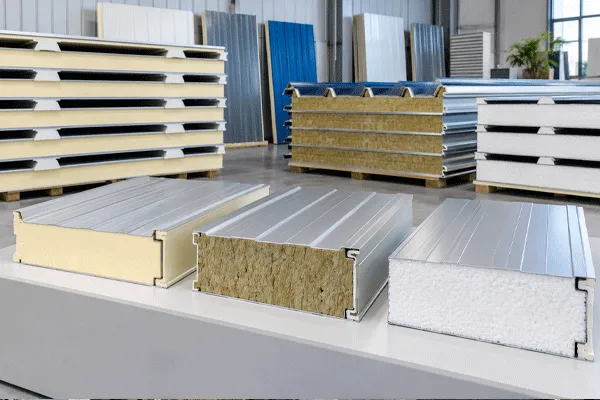
What Are the Different Types of Sandwich Panels?
There are several different types of sandwich panels, and each one has a different balance of insulation, fire performance, weight, cost, and application.
| Panel Type |
Matériau de l'âme |
Main Strength |
Typical Applications |
| Panneau sandwich en PU |
Polyuréthane |
Thermal insulation and lightweight construction |
Warehouses, workshops, commercial buildings |
| PIR Panel |
Polyisocyanurate |
High thermal performance and fire characteristics |
Cold storage and demanding buildings |
| Panneau sandwich en laine de roche |
Laine de roche |
Fire resistance and sound insulation |
Industrial and commercial buildings |
| EPS Sandwich Panel |
Expanded polystyrene |
Cost-effective and lightweight |
General construction and prefab buildings |
A rock wool sandwich panel uses mineral-based insulation and is often selected when fire safety is a major project requirement. Rock wool panels can also provide useful acoustic performance for buildings where noise control matters.
An eps sandwich panel uses expanded polystyrene as its core. An EPS sandwich is generally considered when project budgets are tight and the required performance can be achieved with EPS. The correct choice should always follow the building’s insulation and safety requirements rather than price alone.
How Does the Core Affect Sandwich Panel Performance?
The core is one of the most important components of an insulated panel. It influences thermal insulation, weight, sound performance, fire behavior, and the overall application of the product.
Polyurethane is widely used where good thermal insulation is needed with a relatively lightweight structure. PU systems can help insulate building interiors from outdoor temperature changes, making them suitable for warehouses, workshops, commercial buildings, and some temperature-controlled spaces.
A pu sandwich panel is also useful when installation efficiency matters. Polyurethane foam can provide strong insulation performance without requiring an excessively thick panel. For projects requiring more demanding thermal performance, buyers may consider PIR systems. For projects with stronger fire-performance requirements, rock wool or other mineral-based solutions may be more appropriate.
The right insulation core should therefore be selected according to the actual building rather than using one material for every project.
How Do Sandwich Panel Manufacturers Control Product Quality?
Quality control should begin before the sandwich panel reaches the production line. Raw materials, metal facing, insulation materials, bonding, dimensions, and finished surfaces all influence the final product.
When evaluating a factory, ask how it controls:
- Raw material consistency
- Steel sheet thickness and quality
- Masse volumique de l’âme
- Dimensions du panneau
- Bonding quality
- Finition de surface
- Emballage
- Finished-product inspection
A professional production system should have clear inspection procedures rather than relying only on visual checking at the end of production.
For buyers who want a formal quality-management reference, ISO 9001:2026 is the current edition of ISO’s quality management systems standard. ISO explains that the standard provides a framework for establishing, maintaining, and continually improving a quality management system.
This does not mean an ISO certificate alone guarantees that every sandwich panel is suitable for your project. Buyers should still verify actual product specifications, samples, test reports, and production controls.
Sandwich Panel Manufacturers in China: How to Choose the Right Factory and Supplier
What Should You Look for in a Professional Sandwich Panel Manufacturer?
A professional sandwich panel manufacturer should be able to answer technical questions clearly.
Do not ask only:
“What is your price per square meter?”
Demandez également :
“What is the panel structure, what materials are used, and how will you control quality for my project?”
A professional manufacturer should be able to provide information about:
- Matériau de l’âme
- Épaisseur du panneau
- Metal sheet specification
- Revêtement de surface
- Panel width and length
- Conception des joints
- Demande
- Emballage
- Production lead time
- Personnalisation
The phrase professional sandwich should mean more than an attractive product photograph. It should describe a complete manufacturing and service process in which product specifications are confirmed before production.
For international buyers, it is also useful to compare several suppliers in China using the same specification sheet. This avoids comparing one factory’s 50mm PU product with another factory’s 75mm rock wool product and assuming the prices are directly comparable.
How Do Wall and Roof Sandwich Panels Differ?
A building envelope normally requires different panel solutions for walls and the roof.
A wall panel primarily needs to provide weather protection, insulation, appearance, and suitable mechanical performance. Depending on the building, customers may choose flat or profiled metal surfaces, different colors, and different insulation cores.
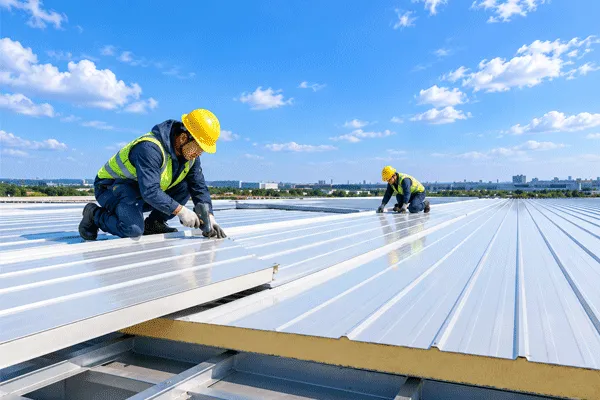
A roof panel must also consider drainage, roof slope, joint sealing, weather exposure, and installation conditions. A suitable sandwich roof system should be selected according to the building structure and local climate.
Par exemple :
| Demande |
Main Considerations |
| Exterior wall |
Insulation, appearance, weather resistance |
| Interior partition |
Weight, sound insulation, installation |
| Roof |
Drainage, sealing, insulation, weather exposure |
| Cold room |
Thermal performance, joints, temperature control |
| Prefab building |
Weight, assembly speed, dimensions |
This is why a factory should not simply recommend the same panel for every part of a building.
Can a China Sandwich Panel Factory Customize Panels?
Yes. Customization is one of the major advantages of working directly with a sandwich panel manufacturer and supplier.
Depending on the production capability, buyers may request:
- Customized panel length
- Different panel thicknesses
- Different core materials
- Couleurs de surface
- Metal profiles
- Joint configurations
- Special dimensions
- Packaging requirements
- OEM branding where available
For example, a prefab manufacturer may need panels cut to specific module dimensions. A commercial project may require a particular color steel surface to match its architectural design. A cold storage contractor may need a specific PU or PIR configuration.
Customization should be confirmed before production because not every factory can produce every panel specification.
Which Sandwich Panel Is Best for Thermal Insulation?
If thermal insulation is the primary requirement, the buyer should first identify the target indoor conditions and local climate.
PU and PIR systems are commonly considered for applications where strong insulation performance is important. Polyurethane sandwich panels provide a combination of low weight and good insulation performance, while PIR systems may be selected when the project has more demanding thermal and fire-performance requirements.
For cold storage, the panel must work together with the complete refrigeration system. The panel itself is only one part of the building envelope.
For general industrial buildings, warehouses, and workshops, the selection may be more flexible. A suitable panel thickness and core can help heat insulation while keeping the building system practical.
The key is to match the insulation properties with the building’s actual requirements rather than simply choosing the thickest panel available.
Why Are Steel Sandwich Panels Widely Used in Construction?
Steel sandwich panels combine a metal facing with an insulation core, making them useful for buildings where speed, weight, and thermal performance matter.
The metal layer provides a durable external or internal surface, while the core provides insulation. Depending on the application, the facing may use galvanized steel, coated steel, aluminum, or other specified metal materials.
These composite panels are widely used in:
- Bâtiments industriels
- Entrepôts
- Ateliers
- Bâtiments préfabriqués
- Bâtiments commerciaux
- Chambres froides
- Storage rooms
- Agricultural buildings
The combination of insulation and structural enclosure can help simplify construction compared with systems that require several separate layers.
For a wall panel, the surface can also contribute to the architectural appearance. For a roof application, the panel system can integrate insulation with the roof enclosure.
How Can Buyers Compare Sandwich Panel Manufacturers in China?
Choosing between sandwich panel manufacturers in china requires more than collecting several price lists.
I recommend comparing factories using a consistent checklist.
1. Product Range
Can the factory produce:
- PU panels?
- PIR panels?
- Rock wool panels?
- EPS panels?
- Wall panels?
- Roof panels?
- Cold room panels?
2. Production Capability
Ask whether the factory operates dedicated sandwich panel production lines and whether it can maintain stable production for your required quantity.
3. Quality Control
Check how the factory controls:
- Raw materials
- Dimensions
- Core quality
- Finition de surface
- Bonding
- Emballage
4. Customization
If your project needs customized sandwich specifications, confirm the factory’s actual capability before signing an order.
5. Export Experience
International orders require more than production. The factory should understand:
- Export packaging
- Chargement du conteneur
- Shipping requirements
- Product documentation
- Destination requirements
6. Communication
Good technical communication matters. A factory should be able to understand drawings, specifications, quantities, and project applications.
Sandwich Panel Manufacturers in China: How to Choose the Right Factory and Supplier
Why Choose Fuqiang as Your Sandwich Panel Manufacturer and Supplier?
Shandong Fuqiang Environmental Protection Materials Co., Ltd. is a China-based building materials co specializing in factory-direct insulated building envelope solutions for global construction projects.
Our product range covers different insulation and building applications, allowing customers to select the appropriate sandwich panel according to project requirements.
We work with:
- Construction contractors
- Building material distributors
- Project developers
- Prefab and modular building companies
- Industrial facility owners
- Warehouse operators
- Chambres froides contractors
- Commercial building developers
- International importers
Our approach is simple: understand the application first, then recommend the appropriate panel materials and specifications.
For example, a customer may require a PU sandwich for an insulated warehouse, a rock wool sandwich panel for a building with stronger fire-performance requirements, or an EPS solution for a cost-sensitive project.
We can also help customers customize panel dimensions, surface finishes, colors, and other specifications according to project requirements.
What Applications Can Sandwich Panels Serve?
The wide range of applications is one reason sandwich panel uses continue to expand across construction projects.
Bâtiments industriels
For factories and workshops, panels can combine wall protection with thermal and acoustic performance.
Entrepôts
A lightweight insulated envelope can help create a more controlled indoor environment.
Entrepôt frigorifique
PU or PIR solutions can be considered for cold storage and cold room applications where temperature control is critical.
Prefabricated Buildings
Panels can help manufacturers prefabricate building components and assemble them efficiently at the project site.
Bâtiments commerciaux
Decorative metal surfaces can provide functional enclosure while supporting a clean architectural appearance.
Residential and Modular Buildings
Lightweight insulated systems can also be used in selected prefab and modular construction projects.
What Should International Buyers Confirm Before Ordering?
Before placing an order with a sandwich panel manufacturer and supplier in china, prepare a complete specification sheet.
At minimum, provide:
| Required Information |
Example |
| Demande |
Warehouse / prefab / cold storage |
| Panel type |
PU / PIR / rock wool / EPS |
| Âme |
Required insulation material |
| Épaisseur |
Project-specific |
| Width |
Project-specific |
| Longueur |
Standard or customized |
| Surface |
Coated steel / color finish |
| Quantité |
m² or pieces |
| Destination |
Country and port |
| Accessories |
Flashings, trims, fasteners |
| Emballage |
Export requirements |
This information helps factories prepare a more accurate quotation.
It also makes price comparisons easier because every sandwich panel manufacturer is quoting against the same requirements.
For large projects, buyers should consider requesting:
- Product samples
- Technical specifications
- Material information
- Test documentation where applicable
- Packaging photos
- Loading photos
These details can reduce misunderstandings before mass production.
What Makes a Reliable China Sandwich Panel Factory Different?
The phrase made in china covers a very wide range of manufacturers. Product quality can vary significantly between factories.
A reliable factory should be able to demonstrate its capabilities rather than relying only on marketing language.
Look for evidence of:
Factory Capability → Product Consistency → Quality Control → Customization → Export Support
This is especially important for international B2B buyers ordering containers of materials.
At Fuqiang, we focus on factory-direct production and project communication. Our goal is to provide customers with a practical insulated building envelope solution rather than simply sell a standard product.
For distributors, stable production and consistent specifications are important for repeat orders. For contractors, accurate dimensions and reliable delivery can help reduce installation problems. For developers, the right panel system can support both project performance and budget planning.
Final Thoughts: Choosing the Right Sandwich Panel Manufacturer in China
Choosing a sandwich panel manufacturer should be treated as a technical and commercial decision, not simply a price comparison.
The right factory should understand your application and help you select an appropriate combination of core material, steel sheet, thickness, surface finish, dimensions, and installation requirements.
Whether you need PU panels for a warehouse, rock wool panels for a fire-focused building, EPS panels for an economical project, or specialized insulation systems for cold storage, the product should be matched to the actual building requirements.
For international contractors, distributors, prefab companies, and project developers, a reliable long-term manufacturing relationship can be more valuable than a one-time low quotation.
Shandong Fuqiang Environmental Protection Materials Co., Ltd. provides factory-direct insulated building envelope solutions for global construction projects, supporting customized specifications, project-based production, export packaging, and international B2B orders.
If you are comparing China sandwich panel manufacturers for an upcoming project, send us your application, panel type, thickness, quantity, dimensions, and destination. We can help you evaluate a suitable panel solution and prepare a project-based quotation.
Points clés
- Choose a sandwich panel according to the building application, not price alone.
- Different cores—including PU, PIR, rock wool, and EPS—provide different performance characteristics.
- Check the core, steel sheet, thickness, surface coating, and dimensions before ordering.
- Wall and roof applications have different design requirements.
- Thermal insulation requirements should be considered together with climate and building use.
- International buyers should evaluate production capability, quality control, customization, packaging, and export support.
- Ask for samples and technical documentation before large-volume production when appropriate.
- Compare sandwich panel manufacturers in China using the same technical specification.
- Factory-direct cooperation can support customized products and stable B2B supply.
- Fuqiang provides insulated building envelope solutions for contractors, distributors, prefab companies, developers, and international importers.
FAQ
What types of sandwich panels can China manufacturers produce?
Common options include PU, PIR, rock wool, and EPS panels, as well as wall and roof systems. The available panel type depends on the factory's production capability.
How do I choose the right sandwich panel for my project?
Start with the application, climate, insulation requirements, fire-performance requirements, panel thickness, building structure, and budget. Then compare suitable core materials and panel configurations.
Is a PU sandwich panel suitable for warehouses?
A PU sandwich panel can be suitable for many warehouses because it combines lightweight construction with thermal insulation. The correct thickness and specification should be selected according to the building requirements.
Les panneaux sandwich peuvent-ils être personnalisés ?
Yes. Many factories can customize dimensions, colors, surface finishes, core materials, and other specifications, depending on production capability.
What should I ask a sandwich panel factory before ordering?
Ask about the core material, steel sheet, panel thickness, dimensions, surface coating, quality control, production capacity, packaging, customization, and export experience.
Why buy sandwich panels directly from China?
Direct factory purchasing can provide access to a wide product range, customization, factory-direct pricing, and project-based production. Buyers should still evaluate quality, technical capability, communication, and export support carefully.



 October 12, 2026