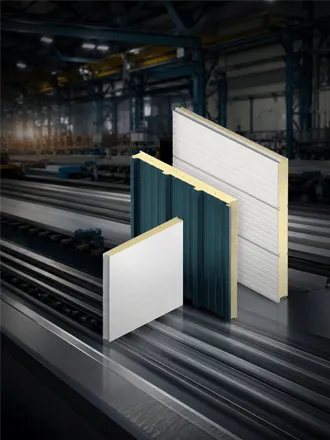
Choosing exterior wall panels based only on the lowest quotation can create unexpected costs later. For one Australian project, panels with a thinner 0.16mm substrate caused quality and appearance concerns after installation, forcing the buyer to reconsider the real cost of low-priced materials.
This case shows why steel sheet thickness, panel consistency, PU insulation quality, panel width, and manufacturing control should all be evaluated before purchasing insulated decorative wall panels.
Quick Answer: High-quality metal wall panels can reduce project risks by using a suitable steel substrate, stable PU insulation, controlled production, and consistent dimensions. In this Australian project, the customer changed from panels with a 0.16mm substrate to Fuqiang’s 500mm-wide panels with a 0.3mm Al-Zn coated steel sheet and high-density PU insulation core.
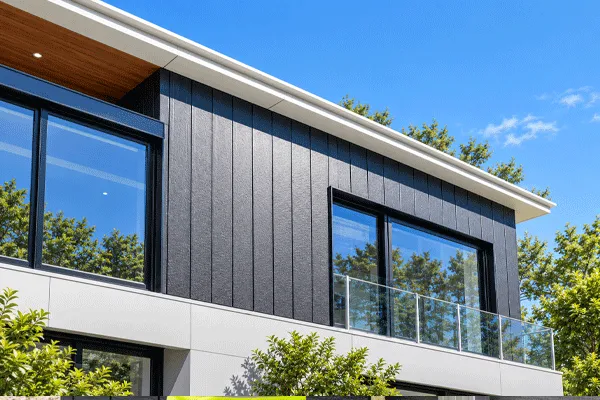
Problems Caused by Inferior Metal Wall Panels: How 0.3mm Metal Wall Panels Solved an Australian Project Challenge
The Australian Project: When a Low Purchase Price Became a Bigger Problem
The Australian customer was involved in an exterior building project requiring insulated decorative metal wall panels.
The customer had previously purchased panels from another supplier. Before installation, the products appeared acceptable. However, after installation began, some panels showed quality and aesthetic issues that affected the overall appearance of the wall.
The original panels used a 0.16mm substrate. Although the lower material specification helped create an attractive initial purchase price, the customer later faced practical problems during construction.
The resulting concerns included:
- Additional installation costs
- Project delays
- Replacement labor
- Additional material costs
- Concerns about long-term durability
- An unsatisfactory appearance in some areas
For an overseas construction project, these problems can become especially expensive because replacing installed panels may involve not only new materials but also additional labor, transportation, and project coordination.
Why Is Product Quality More Important Than the Lowest Panel Price?
For B2B construction buyers, the purchase price is only one part of the total project cost.
A lower-priced panel may appear attractive during the quotation stage. But if the material specification or production consistency is inadequate, the buyer may eventually pay for:
- Removing problematic panels
- Purchasing replacement materials
- Repeating installation work
- Paying additional labor
- Delaying other construction activities
- Shipping replacement materials internationally
This is particularly important for international buyers.
Once panels have arrived at the destination and installation has started, solving a quality problem can be much more complicated than preventing it during procurement.
For this reason, Fuqiang recommends that buyers compare complete product specifications rather than price alone.
The key questions should include:
- What is the actual steel sheet thickness?
- What is the steel substrate?
- How is the steel sheet quality controlled?
- What is the PU core specification?
- How is panel thickness controlled?
- How are finished panels inspected?
- Can the supplier provide samples before production?
These questions can help buyers make a more informed purchasing decision.
What Did the Australian Customer Choose Instead?
After experiencing problems with the previous supplier, the customer decided to prioritize material quality, product consistency, and long-term reliability.
The customer ultimately selected Fuqiang’s insulated decorative metal wall panels.
The new solution featured several important differences:
| Specification |
Previous Product |
Fuqiang Solution |
| Steel substrate |
0.16mm |
0.30mm Al-Zn coated steel sheet |
| Insulation |
Insulated panel |
High-density PU core |
| Effective width |
Not specified |
500mm |
| Backing |
Not specified |
0.06mm reinforced aluminum foil |
| الطول |
— |
Customized |
| Decorative finish |
— |
Multiple options |
The customer placed greater emphasis on material specifications and product stability rather than simply selecting the cheapest quotation.
This change provided a more reliable product solution for the project.
1. 0.3mm Al-Zn Coated Steel Sheet for Better Panel Stability
One of the most important differences between the two products was the thickness of the metal facing.
Fuqiang’s standard product uses a 0.3mm Al-Zn coated steel sheet as the exterior facing layer. According to the supplied project information, these sheets are produced in partnership with Shinmade and undergo quality testing.
Compared with a much thinner substrate, a suitable steel specification can provide advantages such as:
- Better rigidity
- Improved resistance to deformation
- More stable handling during transportation
- More consistent panel performance
- A stronger exterior surface
The metal facing is not simply a decorative layer. It is an important part of the overall panel structure.
Two panels can look similar in product photographs but perform differently if their steel thickness, substrate quality, coating, or manufacturing consistency differs.
For contractors and distributors, therefore, actual material specifications should always be confirmed before ordering.
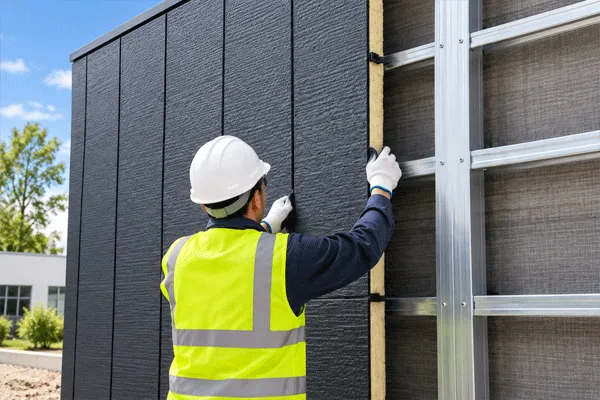
Problems Caused by Inferior Metal Wall Panels: How 0.3mm Metal Wall Panels Solved an Australian Project Challenge
2. Controlled Raw Materials and Manufacturing Quality
Steel thickness is important, but it is not the only factor.
Consistent manufacturing also plays an important role in the quality of insulated decorative wall panels.
At Fuqiang, the production process focuses on controlling several key areas:
- Steel sheet selection
- Surface quality
- Polyurethane foam production
- Panel bonding
- Panel thickness
- Finished-product inspection
Each stage can affect the final product.
For overseas construction projects, consistency is particularly important because customers may need to install many panels across one building façade.
If panel dimensions or surface quality vary significantly, workers may spend more time making adjustments during installation.
A consistent manufacturing process helps contractors work with more predictable materials.
3. High-Density PU Insulation Core
The Fuqiang panel uses a high-density polyurethane (PU) insulation core.
The PU core is produced using a controlled high-pressure foaming process designed to create a stable insulated panel structure.
The supplied project information identifies several benefits of the PU insulation core:
- Thermal insulation
- Lightweight construction
- Structural stability
- Moisture resistance
- Improved energy efficiency
For buildings in Australia and other regions with changing outdoor temperatures, thermal insulation can be an important consideration when selecting exterior wall materials.
The insulation core also contributes to the overall structure of the panel, making the combination of metal facing and PU core an important part of the product design.
4. Why Did Fuqiang Choose a 500mm Panel Width?
Another feature of the Fuqiang solution is its 500mm standard effective width.
Compared with many traditional 383mm-wide decorative metal wall panels, the wider format can provide greater coverage per panel.
This offers several practical benefits.
Greater Coverage
A wider panel can cover more wall area during each installation step.
Fewer Panels
For the same wall area, a wider effective panel can reduce the number of individual panels required.
Fewer Connections
Fewer individual panels can also mean fewer panel connections across the wall.
Faster Installation Potential
With fewer panels to position and install, contractors may be able to improve installation efficiency.
More Efficient Transportation
The product configuration was also designed with international transportation and container-space utilization in mind.
For overseas buyers, transportation efficiency is an important part of the overall purchasing decision.
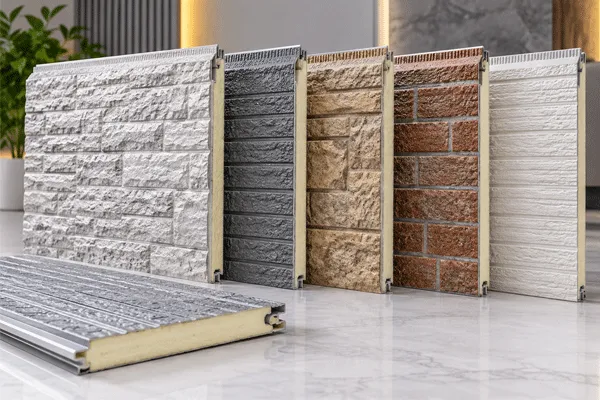
Problems Caused by Inferior Metal Wall Panels: How 0.3mm Metal Wall Panels Solved an Australian Project Challenge
500mm vs 383mm Metal Wall Panels
The difference between 500mm and 383mm may appear relatively small, but it becomes more meaningful across a large wall area.
Based purely on effective width:
500 ÷ 383 ≈ 1.305
This means a 500mm-wide panel provides approximately 30.5% more width coverage per panel than a 383mm-wide panel under comparable conditions.
This does not mean the total project cost will automatically be 30.5% lower. Actual costs also depend on panel length, wall dimensions, windows, doors, cutting requirements, accessories, transportation, and installation.
However, the wider format can reduce the number of individual panels needed.
| Consideration |
500mm Panel |
383mm Panel |
| Effective width |
500mm |
383mm |
| Coverage per panel |
Higher |
Lower |
| Number of panels |
Fewer |
More |
| Potential installation efficiency |
Higher |
Lower |
| Individual handling |
Fewer panels |
More panels |
| Large façade projects |
Well suited |
Possible |
| Small or existing projects |
Suitable |
Suitable |
For large exterior wall projects, this can be an important consideration.
What Should Buyers Check Before Purchasing Metal Decorative Wall Panels?
The Australian project provides a useful lesson for contractors, architects, distributors, and international importers.
Before placing an order, buyers should look beyond the quoted price and check the complete product specification.
1. Steel Sheet Thickness
Ask the supplier for the actual steel thickness.
For example:
Is the stated 0.3mm thickness the actual steel sheet specification?
Do not rely only on product photographs.
2. Steel Sheet Quality
Ask about:
- Steel source
- Coating specification
- Corrosion resistance
- Surface quality
- Quality inspection
Similar-looking steel sheets may have different material and coating specifications.
3. PU Core
The insulation core affects:
- Thermal insulation
- Panel weight
- Structural stability
- Moisture resistance
- Overall panel performance
Ask the supplier about the PU production process and core specification.
4. Panel Width
Panel width affects installation and transportation.
For large wall projects, a 500mm-wide panel may provide practical advantages compared with narrower panels.
5. Production Quality Control
Ask:
- How are raw materials inspected?
- How is panel thickness controlled?
- How is bonding quality checked?
- How are finished products inspected?
- Can samples be provided?
A reliable manufacturer should be able to explain its quality-control process clearly.
Fuqiang Standard Metal Wall Panel Structure
The supplied project specification can be summarized as follows:
| Component |
Fuqiang Standard |
| Surface Layer |
0.3mm Al-Zn (Galvalume) steel sheet |
| تشطيب السطح |
Decorative embossed finish |
| Core Material |
Rigid polyurethane (PU) foam |
| Backing Layer |
0.06mm reinforced aluminum foil |
| Standard Width |
500mm |
| Thickness Options |
10mm / 16mm / 20mm / 25mm |
| الطول |
Customized according to project requirements |
The surface layer provides the exterior decorative finish, while the rigid PU core provides thermal insulation and contributes to the lightweight structure.
The reinforced aluminum foil backing provides an additional protective layer and supports the overall panel structure.
These components work together as an insulated exterior wall system rather than functioning as separate materials.
Before and After: What Did the Project Experience Show?
The supplied project material includes installation-site images showing the project before and after installation. The images on page 9 show the exterior wall during installation and the completed façade area.
The visual comparison supports the main lesson of this case:
Product quality and installation consistency matter to the final appearance of an exterior wall.
The project moved forward after the customer changed its procurement priorities from simply finding a low purchase price to selecting a more stable product specification.
For an exterior façade, the finished appearance depends on several factors working together:
- Panel quality
- Surface consistency
- Panel dimensions
- Installation accuracy
- Joint alignment
- Building structure
- Site conditions
Therefore, selecting the right panel before construction is an important part of project planning.
Why Quality Is an Investment, Not an Extra Cost
The Australian project demonstrates an important principle for international construction procurement:
The lowest initial price is not always the lowest total project cost.
A cheaper panel may reduce the initial quotation but create additional expenses if the product needs to be replaced after installation.
For overseas buyers, replacement can be especially costly because it may involve:
Replacement Material + Labor + International Shipping + Installation + Project Delay
A better purchasing strategy is to compare the complete product value.
This includes:
- Material quality
- Durability
- Surface appearance
- Thermal insulation
- Installation efficiency
- Product consistency
- Supplier reliability
- Long-term project value
This approach is especially useful for contractors and distributors who need predictable products for repeated projects.
Why Choose Fuqiang Metal Wall Panels?
Shandong Fuqiang Environmental Protection Materials Co., Ltd. specializes in insulated decorative metal wall panels for residential, commercial, industrial, and renovation projects.
Our standard product configuration highlighted in this Australian case includes:
- 500mm effective width
- 0.3mm Al-Zn coated steel sheet
- High-density PU insulation core
- 0.06mm reinforced aluminum foil backing
- Customized panel lengths
- Multiple decorative finishes
- Controlled raw-material selection
- High-pressure PU foaming process
- Export packaging support
Fuqiang serves B2B customers including:
- Construction contractors
- Building material distributors
- Project developers
- Prefabricated building companies
- Industrial facility owners
- Architects and building designers
- International importers
For project-based orders, customers can discuss the required panel width, thickness, surface finish, dimensions, quantity, and application with our team before production.
Final Takeaways
The Australian project provides a practical lesson for anyone purchasing insulated decorative metal wall panels:
- Do not compare panels based on price alone.
- Check the actual steel sheet thickness and material specification.
- A 0.3mm Al-Zn coated steel sheet provides a more robust substrate than the 0.16mm substrate used in the customer’s previous product.
- The PU insulation core contributes to thermal insulation, lightweight construction, and structural stability.
- A 500mm effective width can provide greater coverage and fewer individual panels than a 383mm-wide product.
- Production consistency is important for large exterior wall projects.
- Always ask about raw-material inspection and finished-product quality control.
- Request samples and technical specifications before placing a large order.
- Consider the total project cost, including installation, replacement, shipping, and potential delays.
- The right wall panel is an investment in quality, installation efficiency, appearance, and long-term project value.
Looking for Reliable Metal Wall Panels for Your Project?
Shandong Fuqiang Environmental Protection Materials Co., Ltd. provides factory-direct insulated decorative metal wall panels with PU insulation cores, 0.3mm Al-Zn steel sheets, 500mm effective width, customized lengths, and multiple decorative finishes.
Send us your project requirements, panel dimensions, application, quantity, and destination country to request samples, product information, and a project-based quotation.
الأسئلة الشائعة
Why can low-quality metal wall panels increase project costs?
If panels have inconsistent quality or do not meet project expectations, buyers may need to remove installed materials, purchase replacements, pay additional labor costs, and potentially deal with international shipping and project delays.
Why is 0.3mm steel sheet important for metal wall panels?
A suitable steel sheet specification can provide better rigidity, resistance to deformation, handling stability, and a more robust exterior surface. The actual performance also depends on the complete panel structure and manufacturing quality.
What is the standard width of Fuqiang metal carved panels?
The standard effective width described in this project is 500mm. Compared with a 383mm-wide panel, it provides approximately 30.5% greater width coverage per panel under comparable conditions.
What insulation material is used in these panels?
The panels use a high-density rigid polyurethane (PU) insulation core produced through a controlled high-pressure foaming process.
Can Fuqiang customize panel lengths?
Yes. According to the supplied project specification, the panel length can be customized according to project requirements.
What should I provide when requesting a quotation?
For an accurate project quotation, buyers should provide the application, required panel thickness, dimensions, estimated quantity, preferred surface finish, and destination information. This allows the supplier to recommend a suitable configuration.



 11 سبتمبر 2026