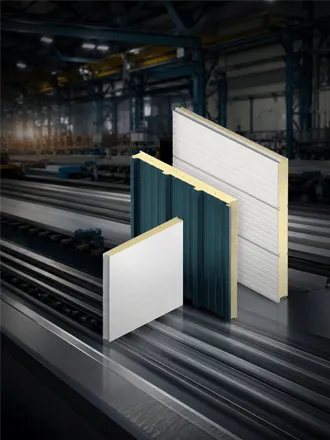
Al comprar paneles sándwich metálicos, muchos compradores se centran principalmente en el espesor total y el precio del panel. Sin embargo, a menudo se pasa por alto un factor importante: espesor de la lámina de acero exterior.
El espesor de la lámina de acero afecta directamente al rendimiento de los paneles de pared aislados, incluidos:
- Resistencia del panel
- Rigidez superficial
- Resistencia a los impactos
- Comportamiento durante el transporte
- Experiencia en instalación
- Long-term durability
Para los proyectos de construcción internacionales, elegir el espesor de acero correcto es esencial para garantizar el equilibrio adecuado entre rendimiento, coste y vida útil.
Este artículo explica cómo el espesor del acero afecta a los paneles sándwich metálicos y cómo seleccionar la especificación adecuada para distintas aplicaciones.
What Is the Steel Facing of a Metal Sandwich Panel?
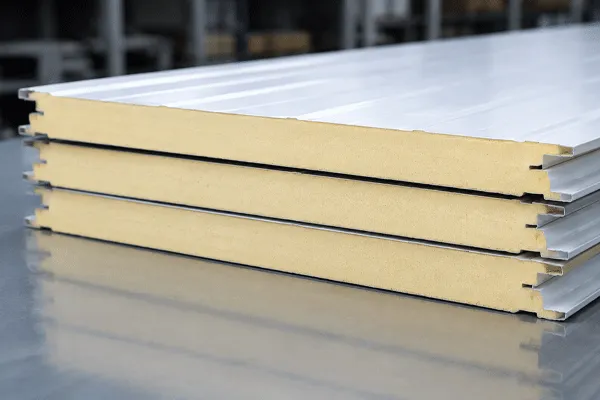
A metal sandwich panel is a multi-layer insulated building material consisting of:
- Steel Facing
- Núcleo aislante
- Backing Layer
The steel facing is the external protective layer of the panel. It provides:
- Surface protection
- Aspecto decorativo
- Rigidez estructural
- Resistencia a los impactos
- Better surface stability
Los materiales de acero más comunes incluyen:
- Galvanized steel
- Acero Aluzinc
- Acero Galvalume
- Acero prepintado
The insulation core usually includes:
- Poliuretano (PU)
- PIR
- EPS
- Lana de roca
The backing layer can be made from:
- Steel sheet
- Aluminum foil
- Lámina de aluminio reforzada con fibra
En conjunto, estas capas determinan el rendimiento general del panel sándwich.
Grosor del acero de los paneles sándwich metálicos: ¿cómo afecta a la calidad del panel?
¿Por qué es importante el espesor del acero en los paneles sándwich metálicos?
El espesor del acero es una de las especificaciones clave que influyen en la calidad y la durabilidad de los paneles de pared aislantes.
Las opciones habituales de espesor del acero incluyen:
- 0,20 mm
- 0.25 mm
- 0.30mm
- 0,35 mm
- 0,40 mm
- 0.50 mm
El espesor correcto depende de:
- Tipo de edificio
- Installation method
- Panel length
- Condiciones climáticas
- Transportation requirements
- Project budget
1. Steel Thickness Affects Panel Rigidity
Uno de los efectos más importantes del espesor del acero es la rigidez del panel.
En las mismas condiciones de material y calidad del acero, un revestimiento de acero más grueso generalmente ofrece una mayor resistencia a la deformación localizada.
Durante el transporte y la instalación, los paneles sándwich pueden estar expuestos a:
- Presión durante la manipulación
- Presión de apilamiento
- Vibration
- Accidental impact
- Tensión de instalación
Una superficie de acero muy fina puede verse afectada más fácilmente por fuerzas externas.
Elegir un espesor de acero adecuado ayuda a mantener la superficie del panel más lisa y estable.
2. Un acero más grueso mejora la resistencia a los impactos
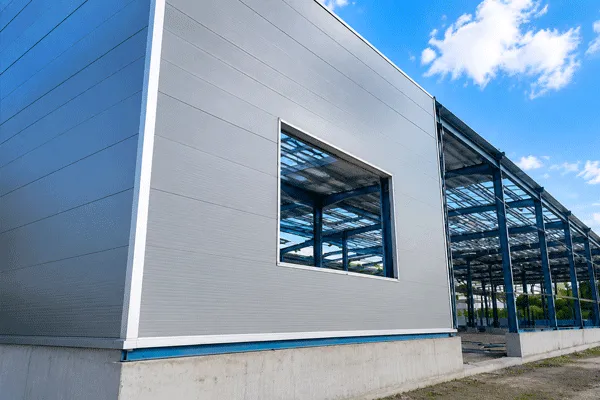
Exterior wall panels may face different impact risks during their service life, including:
- Contacto con herramientas
- Transportation damage
- Presión de instalación
- Colisión accidental
The steel facing protects the insulation core and helps maintain the appearance of the building surface.
Por lo tanto, los compradores no deberían comparar los paneles sándwich únicamente por el precio.
Una pregunta más adecuada sería:
What is the actual steel facing thickness?
Not only:
What is the total panel thickness?
Estas dos especificaciones son completamente diferentes.
3. El espesor del acero influye en el comportamiento durante el transporte
For exported metal sandwich panels, transportation may involve thousands of kilometers before reaching the final construction site.
El proceso de transporte puede incluir:
Fábrica → Camión → Contenedor → Transporte marítimo → Almacén → Obra
Durante el transporte, los paneles pueden verse sometidos a:
- Vibration
- Carga y descarga
- Presión de apilamiento
- Manipulación manual
A suitable steel thickness combined with professional packaging can improve the panel’s ability to handle normal transportation conditions.
Grosor del acero de los paneles sándwich metálicos: ¿cómo afecta a la calidad del panel?
4. Steel Thickness Affects Installation Experience
A high-quality installation requires:
- Una superficie de instalación plana
- Métodos de fijación adecuados
- Correct accessories
- Especificaciones adecuadas de los paneles
El espesor del acero puede influir en la estabilidad del panel durante su manipulación e instalación.
However, installation quality depends on the complete system, including:
- Estructura del edificio
- Método de fijación
- Installation accessories
- Experiencia del instalador
- Diseño del panel
Steel thickness is an important factor, but not the only factor.
Does Thicker Steel Always Mean Better Corrosion Resistance?
Not necessarily.
Many buyers assume:
Acero más grueso = Mayor resistencia a la corrosión
However, corrosion performance depends on multiple factors:
- Steel material
- Zinc or Aluzinc coating
- Coating weight
- Surface paint system
- Condiciones climáticas
- Humidity
- Salt exposure
- Installation environment
A professional evaluation should consider:
Steel Thickness + Coating System + Surface Finish + Application Environment
All these factors work together to determine durability.
Why 0.3mm Aluzinc Steel Facing Is a Balanced Choice
For decorative insulated wall panels, 0.3mm steel facing provides a practical balance between:
- Product weight
- Surface stability
- Strength
- Transportation efficiency
- Coste
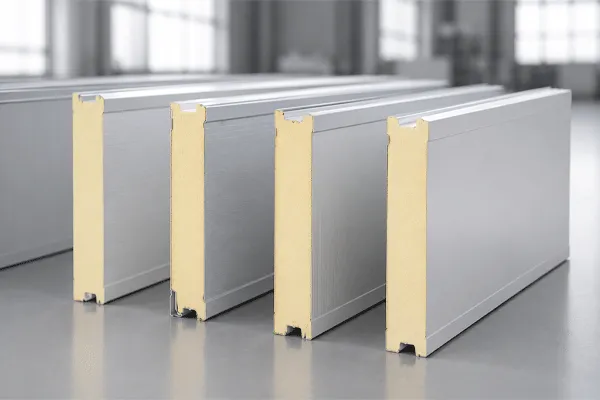
En Shandong Fuqiang Environmental Protection Materials Co., Ltd., our decorative PU insulated metal wall panels use:
0.3mm Aluzinc Steel Facing + High-Density PU Insulation Core
Grosor del acero de los paneles sándwich metálicos: ¿cómo afecta a la calidad del panel?
This structure provides reliable performance for decorative wall applications.
Advantages of 0.3mm Steel Facing
Better Surface Stability
Compared with thinner steel options, 0.3mm steel facing provides better surface stability during transportation, handling, and installation.
Improved Deformation Resistance
Suitable steel thickness helps reduce the risk of local deformation caused by external pressure.
Balanced Weight and Strength
Using thicker steel increases:
- Material consumption
- Peso del panel
- Transportation cost
The goal is not simply to select the thickest steel.
The goal is to choose the right steel thickness for the application.
Steel Thickness Comparison
| Steel Thickness |
General Characteristics |
Typical Application |
| 0.20–0.25mm |
Lightweight and economical |
Cost-sensitive projects |
| 0.30mm |
Balanced strength and weight |
Decorative insulated wall panels |
| 0.35–0.40mm |
Higher surface rigidity |
Higher performance requirements |
| 0.50mm and above |
Increased material strength |
Industrial and engineering applications |
The final specification should always be selected according to the complete panel structure and project requirements.
Steel Thickness vs Total Panel Thickness
Many buyers confuse steel thickness with total panel thickness.
Por ejemplo:
A 16mm sandwich panel does not mean the steel sheet is 16mm thick.
The total panel thickness includes:
- Steel facing
- Núcleo aislante
- Backing layer
For example, a decorative PU insulated wall panel may include:
Steel Facing
0.3mm Aluzinc Steel
Núcleo aislante
High-density polyurethane (PU)
Backing Layer
Lámina de aluminio reforzada con fibra
Total Panel Thickness Options
Available thicknesses may include:
How to Choose the Right Steel Thickness for Sandwich Panels?
Before purchasing metal sandwich panels, consider the application requirements.
For Interior Decoration
Focus on:
- Appearance
- Peso
- Budget
- Installation convenience
For Exterior Wall Cladding
Consider:
- Weather conditions
- Resistencia a los impactos
- Corrosion protection
- Aislamiento térmico
- Installation system
For Commercial Buildings
Consider:
- Building design
- Project requirements
- Local climate
- Long-term maintenance
For Industrial Buildings
Consider:
- Structural requirements
- Wind loads
- Environmental conditions
- Local regulations
Do Not Compare Sandwich Panels by Price Alone
Two sandwich panels may look similar but have completely different specifications.
Price differences may come from:
- Steel thickness
- Steel material
- Coating weight
- Recubrimiento superficial
- PU density
- Panel width
- Backing material
- Production technology
Before comparing prices, always compare:
Specification to Specification
A lower price does not always mean the same product.
What Should You Ask Your Sandwich Panel Supplier?
When sourcing Paneles sándwich de PU or metal insulated wall panels, confirm:
1. Steel Thickness
Ask for the actual steel facing thickness.
2. Steel Material
Examples:
- Galvanized steel
- Acero Aluzinc
- Acero Galvalume
3. Coating Specification
Confirm:
- Coating type
- Coating weight
- Surface paint
4. Insulation Core
For PU panels, check:
- PU density
- Rendimiento del aislamiento térmico
5. Total Panel Thickness
Common options:
6. Panel Width
Panel width affects:
- Installation efficiency
- Number of joints
- Transportation planning
Why Choose Fuqiang PU Insulated Wall Panels?
En Shandong Fuqiang Environmental Protection Materials Co., Ltd., we provide reliable decorative metal insulated wall panels for international construction projects.
Our standard decorative panel structure includes:
Surface Layer
0.3mm Aluzinc steel facing
Core Layer
Núcleo aislante de PU de alta densidad
Backing Layer
Lámina de aluminio reforzada con fibra
Width
500mm
Thickness Options
Longitud
Customized according to project requirements.
Conclusion: Steel Thickness Is an Important Quality Factor
When selecting metal sandwich panels, steel thickness should always be evaluated together with the complete panel structure.
Important factors include:
- Steel thickness
- Steel material
- Coating system
- Núcleo aislante
- Panel density
- Diseño del panel
- Installation method
The best panel is not necessarily the thickest one or the cheapest one.
The ideal solution provides the right balance of:
Strength + Insulation + Durability + Appearance + Cost
Before purchasing, always compare complete technical specifications and choose a professional supplier that can recommend the right panel structure for your project.
Contact Fuqiang Panels
Looking for reliable:
- Metal sandwich panels
- PU insulated wall panels
- Decorative metal wall cladding
Send us your project information:
- País
- Tipo de edificio
- Aplicación
- Required thickness
- Estimated quantity
Our team can recommend a suitable panel solution for your project.
Preguntas frecuentes
How does steel thickness affect metal sandwich panel quality?
Steel thickness affects the rigidity, impact resistance, surface stability, and durability of metal sandwich panels. A thicker steel facing generally provides better resistance to deformation during transportation and installation, but the right thickness should be selected according to the project requirements.
What steel thickness is commonly used for metal sandwich panels?
Common steel facing thickness options for metal sandwich panels include:
0.20mm
0.25mm
0.30mm
0.35mm
0.40mm
0.50mm
The most suitable thickness depends on the application, building type, environmental conditions, and performance requirements.
Is thicker steel always better for sandwich panels?
No. A thicker steel sheet does not always mean a better sandwich panel.
Panel performance depends on the complete structure, including:
Steel thickness
Steel material
Coating system
Insulation core
Panel design
Installation method
The goal is to choose the correct specification rather than simply selecting the thickest steel.
What is the difference between steel thickness and total sandwich panel thickness?
Steel thickness refers only to the thickness of the metal facing layer.
Total sandwich panel thickness includes:
Steel facing
Insulation core
Backing layer
For example, a 16mm sandwich panel does not mean the steel sheet is 16mm thick. It refers to the complete thickness of the assembled panel.
Are 0.3mm steel sandwich panels suitable for exterior walls?
Yes, 0.3mm steel facing can be suitable for many decorative exterior wall panel applications when combined with proper coating, insulation core, and installation methods.
For heavy industrial environments or higher impact requirements, thicker steel facing may be considered.
Why should buyers compare sandwich panel specifications instead of price only?
Different sandwich panels may look similar but have different materials and performance.
Price differences may come from:
Steel thickness
Steel quality
Coating specification
PU density
Production technology
Backing materials
Comparing complete specifications helps buyers select a reliable long-term solution.



 2 de septiembre de 2026