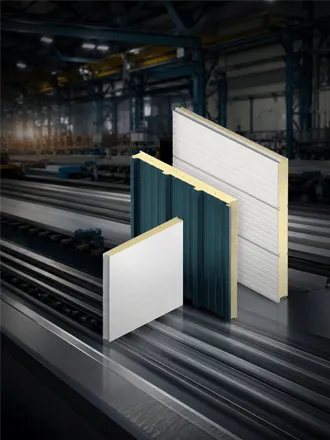
Prefab houses need wall systems that are fast to install, easy to transport, and able to provide a comfortable indoor environment. Traditional building materials can add weight, labor, and construction time. Metal sandwich panels offer a practical alternative by combining exterior wall decoration, thermal insulation, and efficient installation in one building system.
Metal sandwich panels for prefab houses combine a metal exterior surface with an insulation core to create lightweight insulated wall systems. They can be used for exterior walls, modular homes, villas, renovation projects, and other prefabricated buildings where thermal insulation, appearance, durability, and fast installation are important.
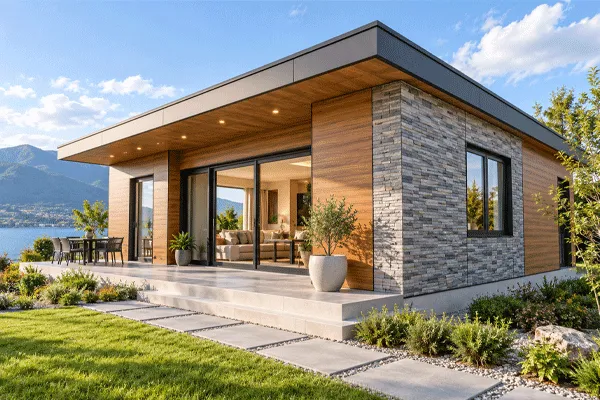
Metal Sandwich Panels for Prefab Houses: Exterior Wall Decoration and Insulation
What Are Metal Sandwich Panels for Prefab Houses?
A sandwich panel is a composite building product made from two outer metal layers and a central insulation core. This structure allows one panel to perform several functions at the same time, including wall protection, insulation, and exterior decoration.
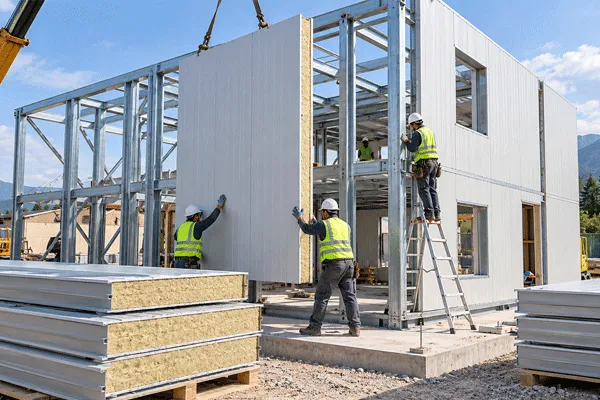
For prefab houses, this construction method is especially useful because the panels can be manufactured in controlled factory conditions and then transported to the building site. Contractors can install the panels onto the prepared structure without building every wall layer separately.
The exterior surface can also be designed with different colors, patterns, and textures. This gives architects and homeowners more freedom when creating the building exterior. Instead of choosing between appearance and practical performance, a properly designed insulated wall panel can provide both.
Why Are Sandwich Panels Suitable for Prefab Houses?
Prefab construction focuses on speed, repeatability, and efficient use of materials. Every additional construction step can increase labor requirements and project time. A factory-produced wall panel can simplify this process.
The panel arrives at the site as a finished building component. Once the steel structure or supporting frame is ready, installers can position the panels, connect the joints, and complete the required sealing work.
Another advantage is weight. Compared with many traditional wall systems, an insulated sandwich panel can provide a relatively lightweight solution. This is useful for modular buildings that need to be transported or assembled quickly.
For prefab manufacturers, the ability to standardize panel sizes can also make production planning easier. For contractors, a predictable installation process can help reduce unnecessary work on site.
Main advantages include:
- Fast installation
- Lightweight construction
- Integrated insulation
- Decorative exterior surfaces
- Factory-controlled production
- Easy transportation
- Suitable for modular construction
- Reduced wet construction work
How Does the Insulation Core Improve Wall Performance?
The insulation core is one of the most important parts of a sandwich panel. It sits between the metal facing layers and helps reduce heat transfer through the wall.
For prefab houses, thermal comfort can be a major concern. Outdoor temperatures can change quickly, and a poorly insulated exterior wall may allow heat to enter or escape easily. A suitable insulated wall panel can help create a more stable indoor environment.
Different insulation materials provide different characteristics. Polyurethane is commonly selected for applications that require good thermal insulation while maintaining a relatively lightweight panel structure.
A PU system uses a polyurethane core between metal surfaces. The resulting polyurethane sandwich panel can provide a combination of insulation, low weight, and efficient installation.
The right insulation core should be selected according to the building location, climate, required insulation performance, panel thickness, and project budget.
What Types of Metal Sandwich Panels Can Be Used for Prefab Buildings?
There is no single panel suitable for every prefab project. Different buildings require different combinations of insulation, surface material, fire performance, and appearance.
PU Sandwich Panels
PU sandwich panels are often selected for projects where thermal insulation and lightweight construction are important.
A pu sandwich system can be used for residential buildings, modular structures, warehouses, workshops, and other projects requiring an insulated exterior wall.
Rock Wool Sandwich Panels
A rock wool sandwich panel uses mineral-based insulation. Rock wool can provide useful fire resistance and sound insulation, making it suitable for projects where these properties are important.
EPS Sandwich Panels
EPS panels use expanded polystyrene as the insulation core. They can provide a cost-conscious solution for selected prefab and temporary building applications.
The choice should not be based only on price. Contractors should consider thermal performance, fire requirements, environmental conditions, structural design, and local building regulations.
| Panel Type |
Main Feature |
Suitable Applications |
| PU |
Strong thermal insulation |
Prefab houses, modular buildings |
| Rock Wool |
Fire and acoustic performance |
Industrial and commercial buildings |
| EPS |
Lightweight and economical |
General prefab applications |
| PIR |
High thermal and fire performance |
Demanding insulated buildings |
How Can Metal Panels Improve Exterior Wall Decoration?
Prefab buildings do not have to look basic.
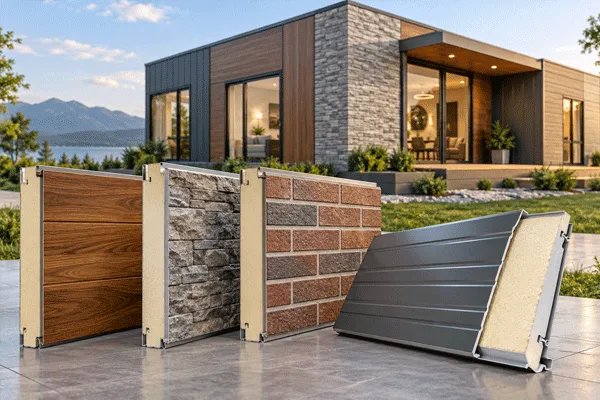
Modern exterior wall systems can provide the appearance of traditional materials while retaining the advantages of prefabricated construction. Decorative metal surfaces can imitate wood grain, stone, brick, marble, or other architectural textures.
This is particularly useful for villas, residential projects, hotels, and modular houses where appearance matters as much as construction speed.
A metal carved panel can create a textured surface with visual depth. Different colors and patterns can then be combined to create a customized facade.
For example, a prefab villa may use a wood-grain surface around the main entrance and a stone-style surface on selected exterior sections. This creates visual contrast without requiring several different traditional wall materials.
The result is a more finished appearance while maintaining the benefits of factory-produced construction.
Metal Sandwich Panels for Prefab Houses: Exterior Wall Decoration and Insulation
Are Insulated Wall Panels Suitable for Villa and Residential Projects?
Yes. Insulated wall panels can be suitable for many residential applications when the panel specification matches the building design and local requirements.
For villas and houses, appearance is usually an important consideration. Homeowners may want a traditional stone or wood appearance while still benefiting from modern insulation technology.
A decorative wall panel can provide the desired visual effect while the insulation layer helps improve wall performance.
For renovation projects, lightweight panels can also be considered where the existing structure needs a new exterior finish without adding an unnecessarily heavy wall system.
The panel system should be selected after checking:
- Existing wall structure
- Required insulation
- Panel weight
- Exterior exposure
- Surface finish
- Joint design
- Installation method
- Local weather conditions
This is especially important for older buildings. A decorative panel may look attractive, but the supporting structure must be able to accept the new cladding system.
What Makes PU Insulated Metal Panels Different?
A PU insulated metal panel combines a metal facing with a polyurethane insulation core.
The metal surface provides the finished appearance and protects the insulation core. The PU foam inside provides thermal insulation.
This structure makes the panel suitable for projects where the contractor wants to combine wall insulation and exterior finishing into one building component.
A metal insulated sandwich panel can also reduce the number of separate construction layers. Instead of installing an exterior finish, insulation, and supporting layers separately, the factory-produced panel brings several functions together.
For prefab houses, this can be particularly useful because the building process already depends on efficient assembly.
Typical PU panel benefits include:
- Good thermal insulation
- Lightweight construction
- Factory production
- Fast installation
- Decorative surface options
- Suitable for modular structures
- Easy-to-handle panel sections
The exact insulation performance depends on the panel thickness, core density, joint design, surface materials, and installation quality.
How Should You Choose Panel Thickness for a Prefab House?
Panel thickness should be selected according to the building’s actual insulation and construction requirements.
A thicker panel is not automatically the best choice. The correct specification depends on the climate, indoor temperature requirements, insulation target, supporting structure, and intended application.
For example, a residential prefab house in a mild climate may have different requirements from a modular building located in a very hot or cold region.
The 16mm decorative panel format can be appropriate for certain interior or decorative applications, but an insulated exterior wall system normally requires a different structure and thickness. Buyers should therefore distinguish between a decorative surface panel and a complete insulated wall panel.
When requesting a quotation, provide the manufacturer with:
- Building location
- Wall area
- Required panel thickness
- Panel length
- Panel width
- Insulation requirement
- Exterior color
- Surface pattern
- Quantity
- Installation requirements
This information allows the manufacturer to recommend a suitable panel rather than simply offering a standard product.
Can Metal Sandwich Panels Be Used for House Renovation?
Metal sandwich panels can be useful for selected exterior wall decoration and renovation projects.
Older houses may have worn exterior finishes, poor insulation, or an outdated appearance. Replacing the entire wall structure can be expensive and time-consuming.
A properly designed exterior cladding system can provide a new surface while improving the building envelope.
For renovation projects, however, the existing wall must be checked before installation. The contractor should consider moisture, structural condition, fixing points, existing insulation, and the condition of the supporting surface.
A new siding panel can improve the appearance of a building, but the installation system must be designed correctly.
For this reason, renovation projects should be evaluated differently from new prefab construction.
How Do Metal Sandwich Panels Support Modular Construction?
Modular construction depends on standardized components that can be produced, transported, and assembled efficiently.
A modular building can be manufactured partly or largely in a factory before being delivered to its final location. Insulated panels fit this approach because their dimensions and surface finishes can be prepared before installation.
For modular housing manufacturers, panels can be produced according to the module dimensions.
This can help with:
- Standardized production
- Faster assembly
- Reduced site work
- Easier material planning
- Consistent exterior appearance
- Factory-controlled quality
The same concept can be applied to temporary offices, worker accommodation, site buildings, residential units, and other prefabricated structures.
A well-designed wall sandwich panel system can also simplify the connection between wall sections, corners, doors, and windows.
What Surface Finishes Are Available for Decorative Metal Panels?
Surface design is one of the strongest advantages of modern decorative panels.
Depending on the product, the exterior surface may be finished with:
- Wood grain
- Stone texture
- Brick pattern
- Marble appearance
- Plain colors
- Horizontal textures
- Vertical textures
- Custom decorative patterns
A metal siding finish can create a clean modern appearance, while a wood-grain surface can make a prefab house feel warmer and more residential.
For commercial buildings and hotels, designers may prefer a more refined stone or marble effect.
Fuqiang’s product range includes decorative metal wall panels as well as PU sandwich panels, allowing buyers to select between decorative-only and insulated panel solutions according to the project. The company’s current product information also highlights customized sizes, colors, patterns, thicknesses, and joint profiles.
How Does Fuqiang Support Prefab House Projects?
Shandong Fuqiang Environmental Protection Materials Co., Ltd. is a China-based manufacturer providing factory-direct insulated building-envelope solutions for international construction projects.
Our customers include construction contractors, prefab and modular building companies, project developers, building-material distributors, and international importers looking for stable factory supply.
For prefab housing projects, we focus on the complete panel requirement rather than only the exterior appearance.
We can discuss:
- Panel type
- Panel thickness
- Panel dimensions
- Insulation core
- Surface color
- Decorative pattern
- Joint design
- Accessories
- Quantity
- Export packaging
For customers who need both insulation and decoration, a PU insulated metal panel can be considered. For projects with stronger fire-performance requirements, rock wool solutions may be more appropriate.
Our goal is to help customers select a panel system that matches the building application, construction method, and project requirements.
Metal Sandwich Panels for Prefab Houses: Exterior Wall Decoration and Insulation
What Should International Buyers Ask a Sandwich Panel Manufacturer?
When purchasing from a factory, price is only one part of the decision.
A professional buyer should ask for clear technical information before placing a large order.
Product Questions
- What is the insulation core?
- What is the panel thickness?
- What is the metal thickness?
- What coating is used?
- What colors are available?
- What panel sizes can be produced?
- Are custom patterns available?
Production Questions
- What is the production capacity?
- How is quality controlled?
- Can samples be provided?
- Can the factory produce customized dimensions?
- What is the production lead time?
Export Questions
- How are panels packaged?
- How many panels fit into a container?
- How are panels protected during transportation?
- Can the factory provide loading photos?
- What export documents are available?
For distributors and contractors, these details are particularly important because a large shipment represents a significant investment.
A reliable manufacturer and supplier should be able to provide clear answers before production begins.
Conclusion
Prefab houses need building materials that support both efficient construction and comfortable living. Metal sandwich panels provide a practical way to combine wall protection, thermal insulation, and exterior decoration.
For residential projects, decorative surfaces can create wood, stone, brick, or modern architectural effects. For modular buildings, factory-produced panels can help simplify assembly and reduce site work. For projects in demanding climates, the right insulation core and panel thickness can improve the building’s thermal performance.
The key is to select the complete system according to the actual project.
At Fuqiang, we work with contractors, prefab manufacturers, developers, distributors, and international B2B buyers to provide factory-direct insulated panel solutions. Whether your project requires a PU insulated wall, decorative metal cladding, or a customized prefab building envelope, the product should be selected based on application, performance, appearance, and installation requirements.
Key Takeaways
- Metal sandwich panels combine metal facings with an insulation core.
- They are suitable for many prefab and modular building applications.
- PU panels provide a practical combination of lightweight construction and thermal insulation.
- Rock wool panels can be considered when fire and acoustic performance are important.
- Decorative surfaces can imitate wood, stone, brick, and other architectural finishes.
- Insulated wall panels can be used for villas, houses, modular buildings, and selected renovation projects.
- Panel thickness should be selected according to climate, insulation requirements, structure, and application.
- Exterior wall decoration and insulation can be combined in one integrated panel system.
- International buyers should confirm panel specifications, surface finish, dimensions, packaging, and customization before ordering.
- Working directly with an experienced sandwich panel manufacturer can simplify technical communication and project-based procurement.
FAQ
Are metal sandwich panels suitable for prefab houses?
Yes. Metal sandwich panels are suitable for many prefab and modular housing projects because they combine exterior protection, insulation, and efficient installation in one building component.
Can PU sandwich panels be used for residential exterior walls?
Yes. PU sandwich panels can be used for residential and modular exterior walls when their thickness, insulation performance, surface finish, and fixing system meet the project requirements.
Can decorative metal panels imitate wood or stone?
Yes. Decorative metal panels can be manufactured with different patterns and surface finishes, including wood-grain, stone, brick, and other architectural effects.
Are metal sandwich panels suitable for house renovation?
They can be suitable for selected renovation projects. The existing wall and supporting structure should be inspected first to determine whether the proposed panel and fixing system are appropriate.
Can Fuqiang customize sandwich panels for prefab houses?
Yes. Project-specific requirements such as panel dimensions, thickness, colors, patterns, joint profiles, and packaging can be discussed with Fuqiang according to the production capability and project requirements.
What information should I provide when requesting a quotation?
Provide the building type, project location, wall area, panel type, thickness, dimensions, insulation requirements, surface finish, quantity, and destination. Drawings or project specifications are also helpful for customized orders.



 October 20, 2026